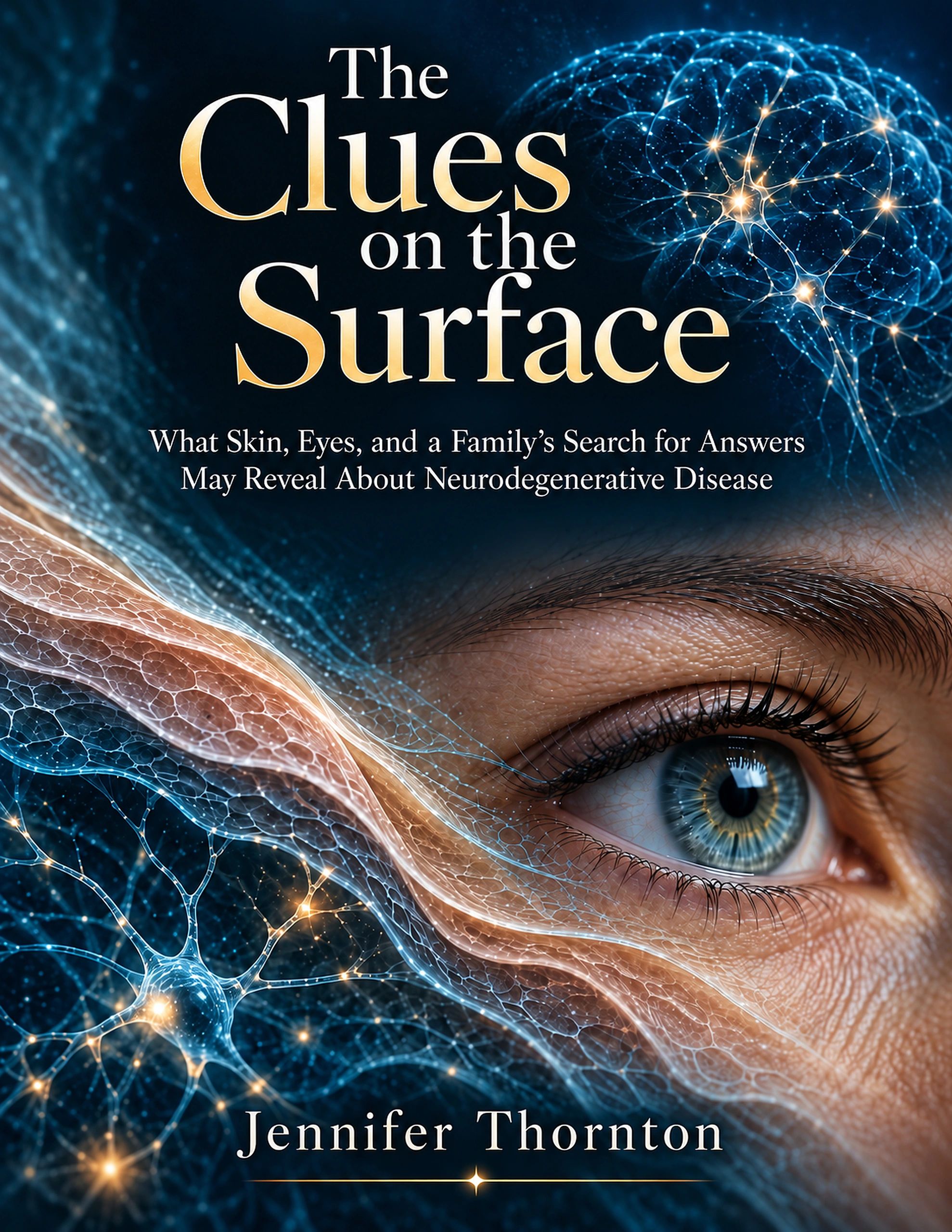
New Release - The Clues of the Surface
What if some of the clues to devastating neurological diseases have been visible on the surface of the body all along?
This book begins with a family searching desperately for answers—and evolves into an investigation of questions that medicine may not be asking often enough.
After witnessing unusual skin and eye problems alongside serious neurological symptoms in people she loved, Jennifer Thornton began documenting patterns, studying the medical literature, and questioning whether conditions affecting the skin, eyes, microbes, mites, inflammation, immune function, and environmental exposures could provide important clues to diseases such as Parkinson’s disease, Alzheimer's Disease and Lewy body dementia.
What she discovered was a scientific trail far more complex—and compelling—than she expected.
Drawing from her family’s experiences, published medical research, emerging biomarker science, epidemiological studies, and conversations with researchers and physicians, Jennifer explores possible connections among the skin, eyes, immune system, infectious and vector-related exposures, the environment, and the brain. She examines intriguing findings involving Demodex and other mites, microbial communities, pesticides, inflammation, sleep disorders, dermatologic disease, and alpha-synuclein—while asking a larger question: What if identifying and treating contributing factors earlier could help change the course of neurodegenerative disease?
Jennifer’s work has been published in the Journal of Alzheimer’s Disease and the Journal of Parkinson’s Disease, and findings from a nationwide epidemiological study have reported associations consistent with important aspects of the hypothesis she has been investigating.
The journey ultimately became more than a search for answers. Jennifer and her mother helped establish the INSIGHT Institute for Neurodegenerative Research, a nonprofit created to support scientists and physicians willing to investigate these overlooked questions through rigorous research and human studies.
Part personal story, part scientific investigation, and part call for a new approach to chronic disease, this book challenges readers to look beyond treating symptoms alone and begin searching more aggressively for causes, contributors, biomarkers, and opportunities for prevention.
It is a story about loss, persistence, unanswered questions—and hope.
Because if even some neurodegenerative diseases can be slowed, prevented, or one day reversed by understanding what is driving them, then the most important discoveries may begin with something remarkably simple:
Looking where others have not thought to look.
Available on Amazon for $2.99 AMAZON Link